Welcome to our curated guide on togean tour — the definitive resource for premium options across Indonesia.
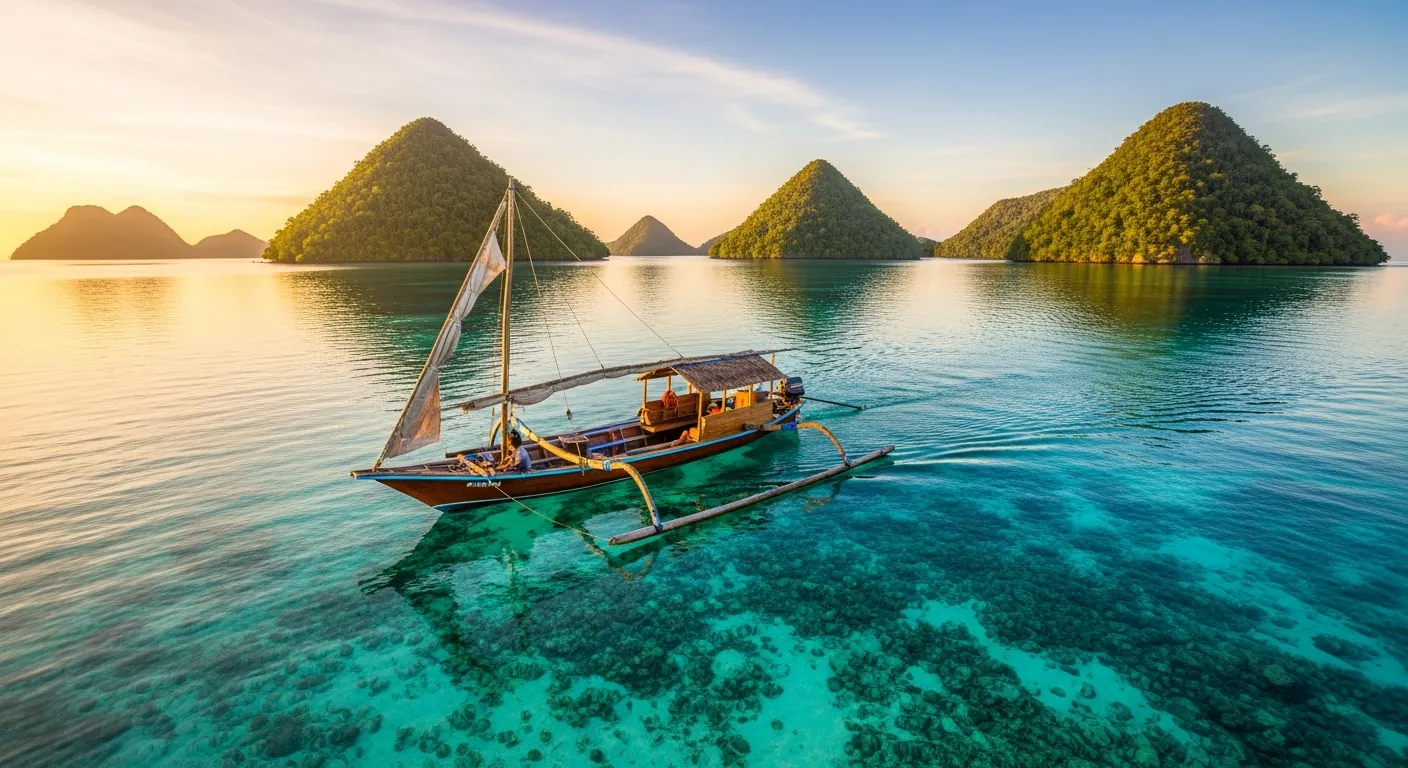
The Equatorial sun beats down on the Gulf of Tomini, illuminating the turquoise shallows that give way to deeper sapphire. Here, the Togean Islands rise, an archipelago sculpted by volcanic forces and fringed by coral, where the rhythm of life adheres to the tides and the passage of traditional wooden boats. This is Central Sulawesi, a region where ancient cultures persist and marine biodiversity thrives, inviting exploration beyond the well-trodden paths.
Understanding the Togean Archipelago: Islands and Logistics
A Togean tour centers on understanding the geography and transport logistics of this expansive archipelago. The Togian Islands, located at approximately 0.39167 degrees south latitude and 121.95778 degrees east longitude, comprise 56 islands and many offshore islets. These islands are part of Tojo Una-Una Regency, Central Sulawesi Province, Indonesia. Key islands include Batudaka, Togean, Talatako, Una-Una, Walea Bahi, Walea Kodi, and Malenge. Togean Island itself, with an area of about 237 square kilometres, is the second-largest in the archipelago. Access typically begins from Ampana on the Sulawesi mainland, where ferries and speedboats depart for Wakai, the primary hub on Batudaka Island. From Gorontalo, further north, an overnight ferry offers a less frequent but direct route to Wakai, often arriving in the early morning. Boat transfers between islands are frequent, though schedules can be fluid, relying on local demand and weather conditions. Understanding these connections is fundamental to structuring an efficient island-hopping itinerary, allowing passage between distinct island communities and varied marine environments. The journey itself, often by wooden boat, is an integral part of the Togean experience, offering panoramic views of the volcanic landscape meeting the sea.
Ampana to Wakai and Beyond: Ferry Schedules and Island Hopping
The primary gateway to the Togean Islands from Central Sulawesi is Ampana. From Ampana, various boat options connect to Wakai, the main entry point on Batudaka Island. The public ferry from Ampana to Wakai operates on a fixed schedule, typically departing in the morning and taking approximately 3-4 hours. Speedboats offer a faster alternative, reducing travel time to around 1.5-2 hours. From Wakai, onward boat transfers to other major islands like Malenge, Kadidiri, or Una-Una are arranged through guesthouses or local boatmen. These transfers are often smaller, privately chartered vessels, providing flexibility for specific itineraries. For travelers arriving from Gorontalo, the KM Tuna Tomini ferry provides a direct overnight connection to Wakai, departing Gorontalo usually twice a week in the late afternoon and arriving the following morning. This route takes approximately 12-14 hours. It is advisable to confirm ferry schedules locally upon arrival in Ampana or Gorontalo, as they can be subject to change due to weather or public holidays. Planning inter-island transfers requires coordination, often best facilitated through pre-arranged bookings with accommodations on the destination islands.
Beneath the Surface: Togean Diving and Snorkeling Tours
The marine ecosystems of the Togean Islands are a primary draw for visitors, offering extensive opportunities for diving and snorkeling. Kepulauan Togean National Park extends about 102.7 kilometres from west to east within Tojo Una-Una Regency, Central Sulawesi, protecting a diverse range of coral reefs, mangroves, and seagrass beds. The park encompasses various reef types, including fringing reefs, barrier reefs, and atolls. Water temperatures generally range from 27 to 30 degrees Celsius, supporting a wide array of marine life. Dive sites vary in depth and current, catering to different experience levels. Common sightings include barracudas, reef sharks, green turtles, and various species of colorful reef fish. Visibility frequently exceeds 20 meters. Snorkeling is accessible from many beach fronts, with house reefs often teeming with vibrant corals and small fish. Dedicated snorkeling tours often visit multiple sites in a single outing, including coral gardens and specific spots known for larger pelagic species. Dive centers, primarily located on Batudaka and Malenge islands, offer equipment rental, guided dives, and PADI certification courses. The health of the Togean reefs is a key conservation focus, with local initiatives working to protect these fragile environments.
Jellyfish Lake Snorkeling in Togean: Danau Mariona
One of the unique natural attractions in the Togean Islands is Danau Mariona, the jellyfish lake located on Kakaban Island. This marine lake, isolated from the open ocean, hosts a population of non-stinging jellyfish. Four species of jellyfish reside in the lake: golden jellyfish (Mastigias papua), moon jellyfish (Aurelia aurita), spotted jellyfish (Phyllorhiza punctata), and box jellyfish (Tripedalia cystophora). Over millennia, these jellyfish have lost their stinging capabilities due to the absence of predators in the confined lake environment. Snorkeling in Danau Mariona offers an unusual opportunity to swim among thousands of these gelatinous creatures without risk. Access to the lake involves a short boat ride and a walk along a wooden boardwalk. Visitors are advised to avoid sunscreen or insect repellent before entering the lake to protect its delicate ecosystem. The water in the lake is brackish, a mix of freshwater from rainfall and saltwater seeping through the porous limestone. This specific environment has fostered the unique adaptation of the jellyfish, making it a significant ecological site and a popular snorkeling destination.
Una Una Volcano Hiking Trips: Terrestrial Exploration
Beyond the marine realm, the Togean Islands offer terrestrial exploration, most notably hiking on Una Una Island. Una Una is a stratovolcano rising directly from the sea, an active volcanic cone reaching an elevation of 507 meters above sea level. The island is circular, approximately 6 kilometers in diameter, and its volcanic soil supports lush vegetation. A hiking trip to the crater rim or summit provides panoramic views of the surrounding archipelago and the vast Gulf of Tomini. The ascent typically takes 3-4 hours, depending on the chosen route and fitness level. Local guides are essential for understanding the trails, which can be steep and unmaintained in sections. The last significant eruption of Una Una occurred in 1983, displacing the island’s population temporarily. Today, a small community resides on its slopes, relying on fishing and agriculture. The hike offers insights into volcanic geology and the resilience of island ecosystems. Views from the higher elevations often reveal the sheer scale of the Togean archipelago, with distant islands appearing as dark silhouettes against the horizon. The journey to Una Una itself involves a boat transfer, usually from Wakai or Malenge, taking approximately 1.5-2 hours.
Bajau Villages: Cultural Encounters and Sea Nomads
The Togean Islands are home to several communities of the Bajau people, often referred to as ‘sea nomads’. These indigenous groups have historically lived a semi-nomadic life on houseboats or stilt houses built over the water, relying entirely on the sea for their sustenance. Their traditional fishing methods, often involving spearfishing and free diving, are integral to their culture. Visits to Bajau villages, such as those found near Malenge Island or around the northern reaches of Batudaka, offer a glimpse into their unique way of life. These villages are characterized by their intricate networks of wooden walkways connecting houses built on stilts, stretching out over the shallow reefs. Interactions with Bajau communities can involve observing their daily routines, witnessing traditional boat building, or learning about their sustainable fishing practices. The Bajau language and customs are distinct from other Indonesian ethnic groups. Responsible tourism practices emphasize respectful engagement, often facilitated by local guides who can bridge cultural differences. These encounters provide a human dimension to the Togean tour, highlighting the symbiotic relationship between the people and their marine environment. The Bajau are known for their exceptional breath-hold diving abilities, a skill passed down through generations.
Kepulauan Togean National Park Regulations and Responsible Travel
Understanding and adhering to the regulations of Kepulauan Togean National Park is crucial for any tour. The park, established to protect its diverse ecosystems, enforces rules regarding marine activities, waste disposal, and interaction with wildlife. Entry fees apply for foreign visitors, contributing to park management and conservation efforts. These fees are typically collected upon arrival at designated entry points or through tour operators. Regulations prohibit the collection of coral, shells, or marine organisms. Fishing within protected zones is also restricted to specific areas and traditional methods. Visitors are encouraged to minimize their environmental impact by practicing responsible waste management, avoiding single-use plastics, and refraining from touching marine life while diving or snorkeling. Anchoring boats in sensitive coral areas is prohibited; designated mooring buoys should be used. Respect for local customs and communities, particularly the Bajau, is also paramount. This includes dressing modestly when visiting villages and asking permission before taking photographs. Adherence to these guidelines ensures the long-term preservation of the Togean Islands’ natural beauty and cultural heritage for future generations. The park’s management aims to balance conservation with sustainable tourism development.
Source 1
Source 2
Source 3
Source 4
Planning a Togean Islands tour requires attention to detail, from understanding boat transfers and National Park regulations to identifying specific interests like diving, hiking, or cultural immersion. The archipelago offers a unique blend of natural beauty and cultural richness, rewarding independent travelers with authentic experiences. For comprehensive information and assistance in structuring your journey through this remarkable region, explore further resources at togeantour.com.